Industrial deployment case study
DJI Dock 3 for Industrial Drone Inspection and Factory Patrol
A fixed autonomous-drone station can become part of a facility’s inspection infrastructure, supporting repeatable visual, thermal, maintenance, and perimeter missions.
Fixed installation
Designed as long-term site infrastructure
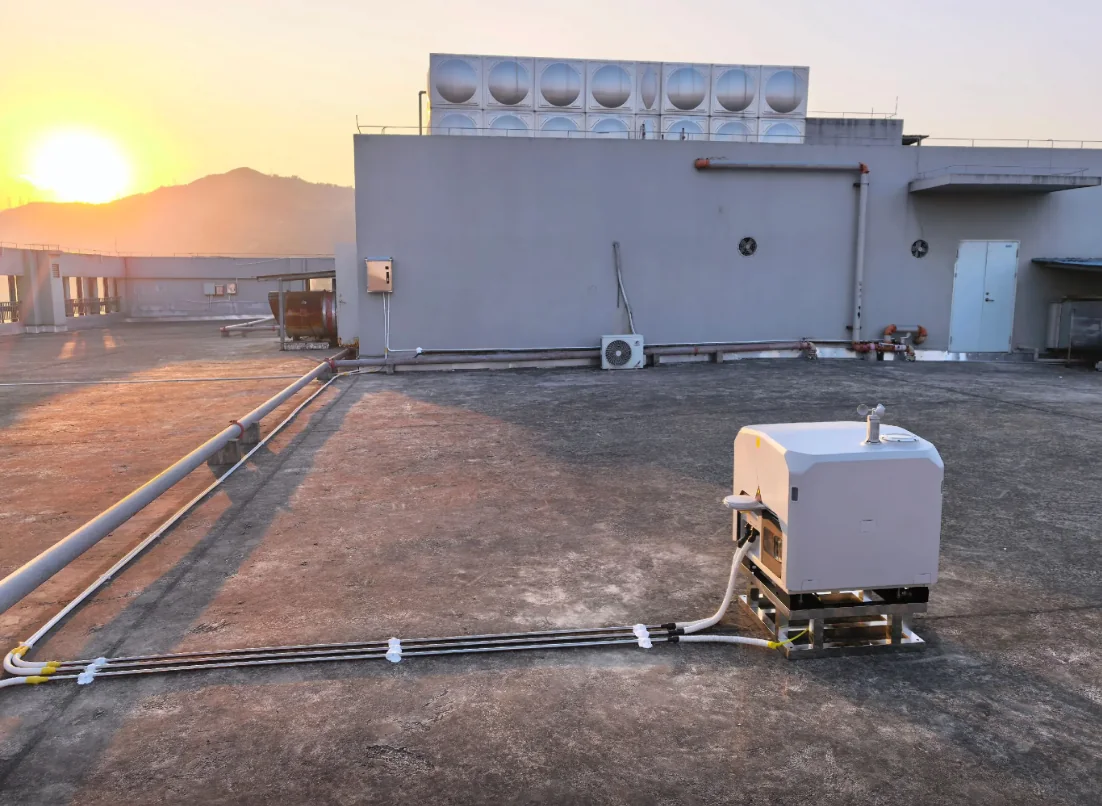
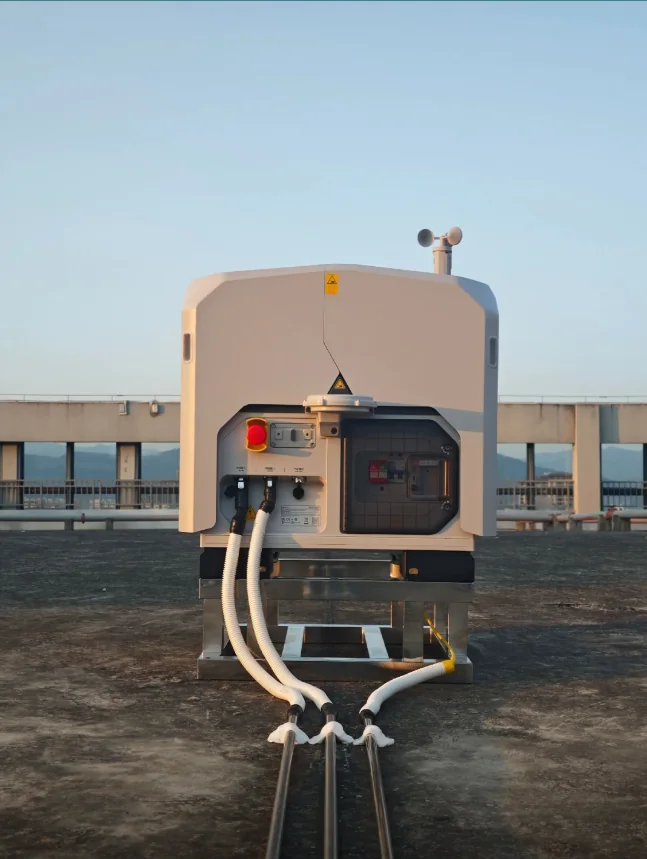
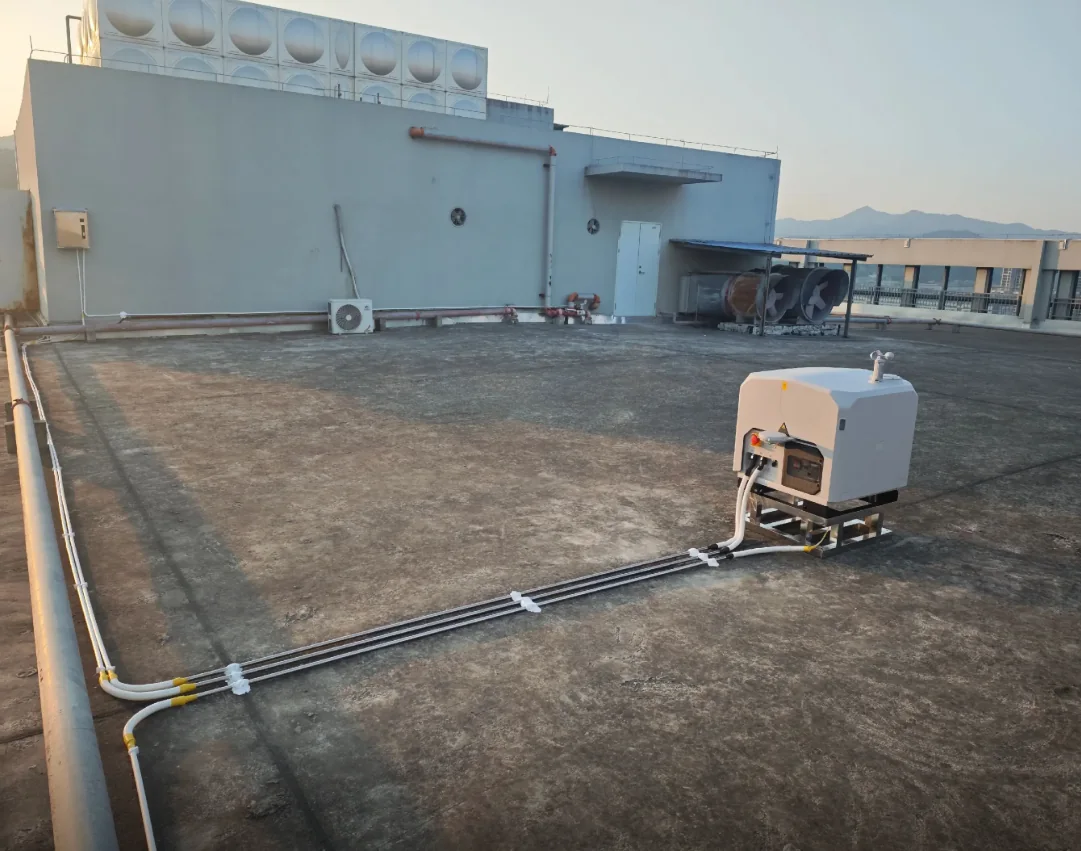
The supplied images show Dock 3 on a dedicated rooftop frame with permanent, organized cable routing across an industrial facility.
- Deployment
- Fixed industrial
- Data
- Visual & thermal
- Operations
- Inspection & patrol
- Aircraft
- Matrice 4D Series
01 / Deployment logic
What this industrial Dock 3 deployment shows
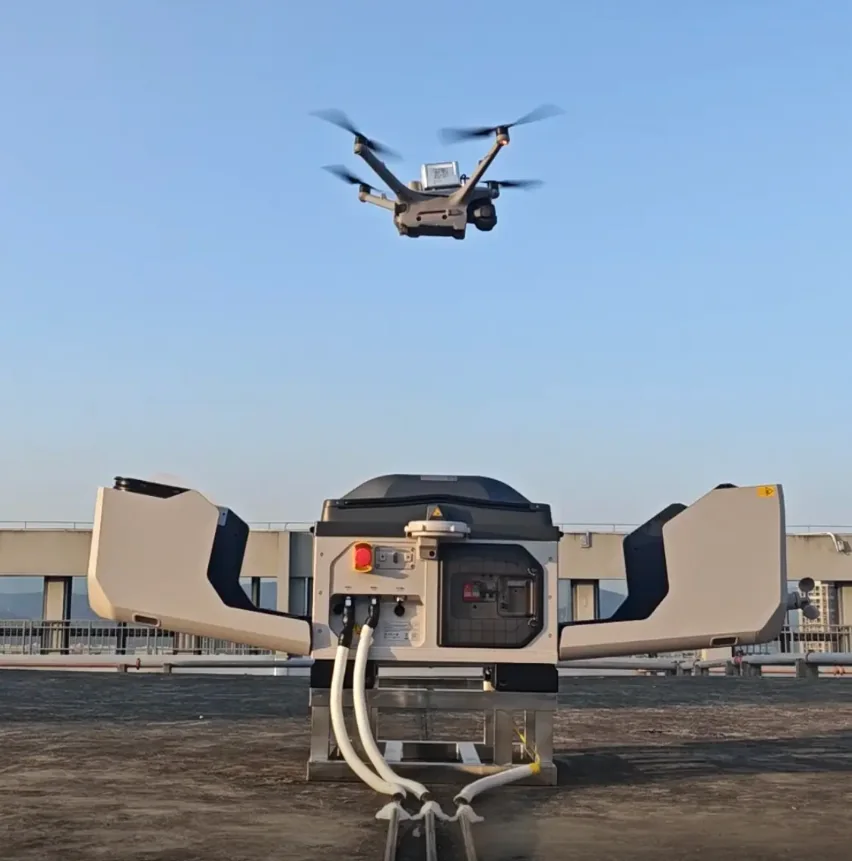
The dock sits on a dedicated support frame, with organized cable routing running across the roof to the installation point. The aircraft is shown launching directly from the station, illustrating the complete concept: fixed base, repeatable route, return, recharge, and readiness for the next authorized mission.
This is different from a temporary field setup. A factory or plant can design the dock into its long-term inspection infrastructure, with permanent power, communications, grounding, network security, access controls, and predefined routes. The objective is to create a consistent inspection record that maintenance, security, and operations teams can use.
Industrial sites contain many outdoor assets spread across a controlled area: roofs, cooling systems, pipe racks, solar arrays, yards, perimeter roads, warehouses, stacks, storage areas, and construction zones. A fixed aerial viewpoint can complement CCTV, ground rounds, sensors, and maintenance programs.
Why facilities use autonomous drone inspection
Traditional inspection can require technicians to walk large sites, access roofs, climb structures, stop equipment, arrange lifts, or coordinate specialist pilots. Many of those activities remain necessary, but not every routine check requires immediate hands-on access. Aerial inspection creates a first layer of evidence that helps teams decide where closer examination is justified.
A dock-based system adds repeatability and availability for daily, weekly, or monthly checks, comparison after maintenance, and rapid documentation after alarms or severe weather.
The value is strongest when drone data connects to an existing process. A possible issue should lead to a defined action: verify, compare, create a work order, dispatch a technician, or escalate to an engineering or safety team.
02 / Mission fit
Industrial inspection tasks Dock 3 can support
- Roofs & envelopesDocument roof surfaces, drainage, penetrations, parapets, façades, and visible change over time.
- External equipmentObserve cooling equipment, tanks, pipe racks, machinery, conveyors, substations, and assets difficult to see from ground level.
- Thermal screeningUse Matrice 4TD thermal imagery for selected electrical, solar, equipment, and process assets under an appropriate method.
- Solar & energyRun repeatable visual and thermal inspection of rooftop arrays, substations, and distribution equipment.
- Construction & shutdownsDocument progress, staging areas, temporary structures, and changing conditions during expansion or maintenance.
- Perimeter & yard patrolAdd aerial visibility across fences, access roads, outdoor storage, loading areas, and remote site corners.
- Post-incident assessmentEstablish situational awareness after alarms, storms, fire-related events, or equipment failure before difficult access.
Supplied deployment photography
Base, launch, and utility routing
The full set documents the three physical layers of a permanent system: the support installation, the aircraft workflow, and protected site services.
03 / Data layer
Using Matrice 4TD for visual and thermal industrial data
Matrice 4TD is the thermal-focused Dock 3 aircraft. DJI lists wide, medium-tele, and tele visible cameras together with a 640×512 thermal imager, NIR auxiliary light, and laser rangefinder. That combination can provide scene context and temperature-focused observations from a repeatable route.
Thermal data should be treated as measurement evidence, not an automatic diagnosis. Emissivity, reflected temperature, distance, angle, material, weather, and camera settings can influence the result. A serious program defines suitable assets, exception criteria, review responsibility, and when a qualified technician must verify a finding.
Visible cameras are equally important. Zoom imagery can examine equipment detail without flying unnecessarily close, while wider views show surrounding conditions and whether a change is local or site-wide.
Review the DJI Matrice 4TD and the complete Dock 3 + Matrice 4TD solution when thermal inspection is part of the scope.
04 / Operational workflow
From scheduled flight to maintenance work order
The most useful industrial program connects every route to a specific review question and a defined decision process.
- DefineSet the asset list, evidence standard, and required frequency.
- CaptureCreate safe, repeatable routes for the required viewpoints.
- ReviewAssign who classifies anomalies and where results are stored.
- IntegrateConnect outputs to maintenance, GIS, security, or reporting.
- RespondCreate a work order, verify the finding, or escalate.
DJI FlightHub 2 can provide the operational layer for compatible dock missions, including planning, scheduling, monitoring, and review. Integration with maintenance, asset-management, security, GIS, or reporting processes may be manual, workflow-based, or supported by additional software.
This approach is more useful than collecting imagery without a review standard. Each mission should answer a question: Has the roof changed? Is a component showing an abnormal thermal pattern? Is contractor work progressing? Is there an unexpected condition inside the perimeter?
05 / Engineering
Fixed rooftop design for factories and plants
A permanent installation should be engineered like site infrastructure. Document the support base, roof load, drainage, cable routing, grounding, lightning and surge protection, network architecture, power quality, backup strategy, maintenance access, physical security, and emergency isolation.
The surrounding roof environment deserves equal attention. Exhaust outlets, cooling towers, fans, steam, dust, cranes, antennas, high-voltage equipment, and large metal structures can affect flight conditions or positioning. Review the dock location and routes together.
DJI publishes an IP56 rating and −30°C to 50°C operating range for Dock 3. These figures support outdoor deployment, but the commissioned site may use narrower limits based on plant safety rules, weather, wind exposure, contamination, or aircraft procedure.
Industrial security and perimeter awareness
A drone dock can complement CCTV and ground patrol by adding a movable viewpoint across perimeter sections, storage yards, rooftops, remote roads, and other areas that would require many fixed cameras to observe from multiple angles.
It should not replace security personnel or established alarms. A stronger design uses the drone as another sensor and response resource, with operator oversight, privacy controls, evidence retention, aviation compliance, and cybersecurity built into the program.
06 / Business case
Build the case around current inspection work
Compare the dock program with the current process. Useful inputs include manual inspection hours, travel or access time, lift or scaffolding costs, pilot call-out costs, inspection frequency, incident-response delay, data consistency, and the value of earlier issue detection.
Not every task should be automated. The strongest candidates are frequent, repeatable aerial checks where consistent data and faster availability create value. Hands-on inspections, certified tests, repairs, and engineering decisions remain with qualified personnel. The dock is an inspection multiplier that helps those teams work from better evidence.
For system architecture and commissioning detail, see the DJI Dock 3 autonomous drone-dock guide and the broader drone-in-a-box deployment overview.
Program questions
Frequently asked questions
How can DJI Dock 3 be used in a factory?
It can support repeatable roof and equipment inspection, Matrice 4TD thermal screening, solar monitoring, construction documentation, perimeter patrol, and post-incident assessment with an approved site workflow.
Can DJI Dock 3 replace manual industrial inspection?
No. It complements manual inspection by improving aerial coverage and repeatability, while qualified personnel remain responsible for hands-on checks, engineering conclusions, maintenance, and repairs.
Is Matrice 4TD suitable for industrial thermal inspection?
Yes. Matrice 4TD combines a 640×512 thermal imager with visible cameras, NIR illumination, and laser rangefinding. Reliable thermal work still requires suitable conditions, settings, review methods, and verification.
Can an industrial Dock 3 system perform security patrols?
Yes, for approved scheduled or event-driven observation of perimeters, yards, roads, and outdoor areas. Integrate it with existing security procedures, operator oversight, privacy rules, evidence policies, and aviation requirements.
Planning an industrial Dock 3 inspection system?
Define the facility architecture and response target
Send AeroNest the facility layout, target assets, mission frequency, thermal requirements, site photos, power and network information, country, aircraft preference, and response target. We can define the architecture, installation scope, software, spares, shipping, and deployment support.